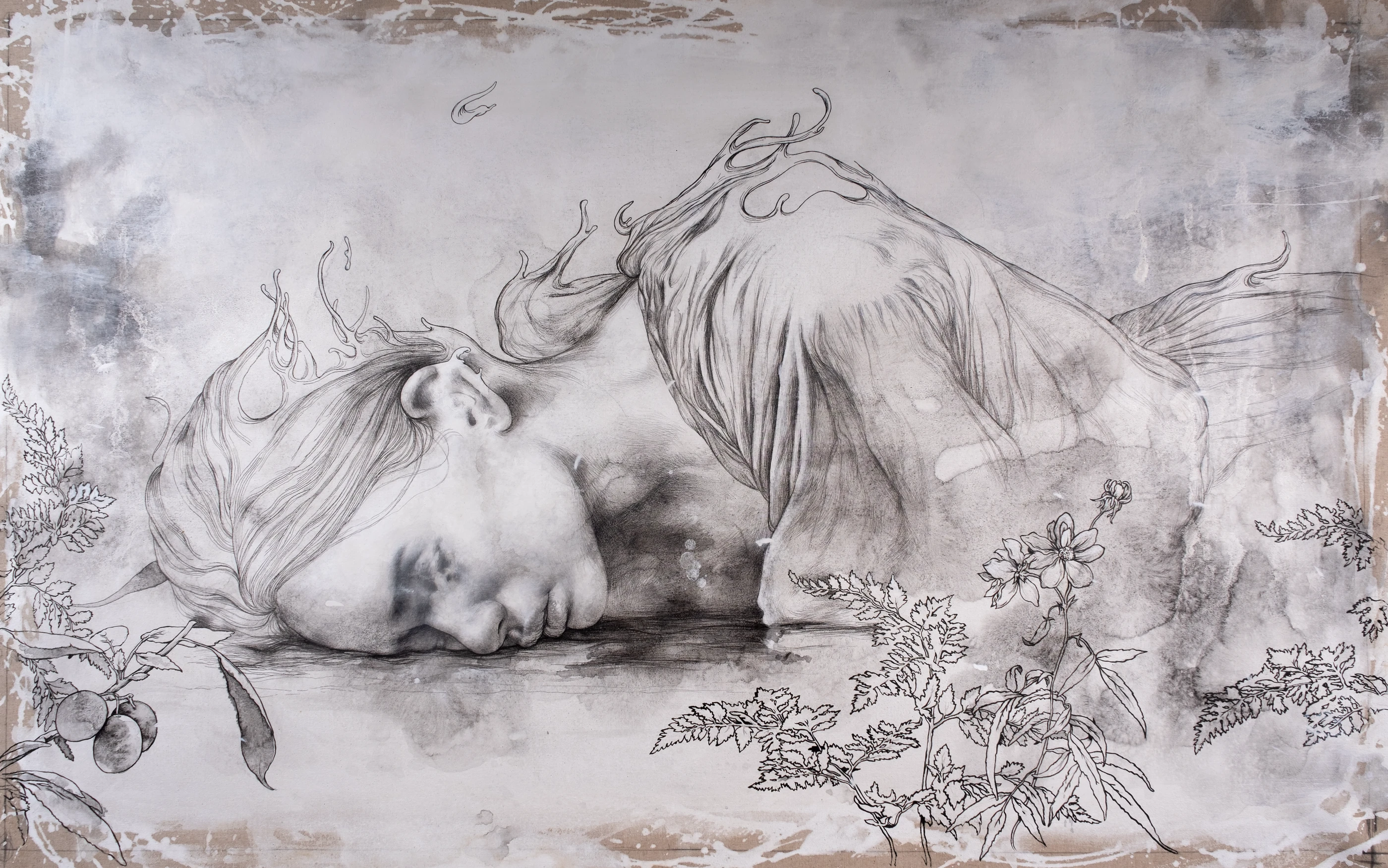
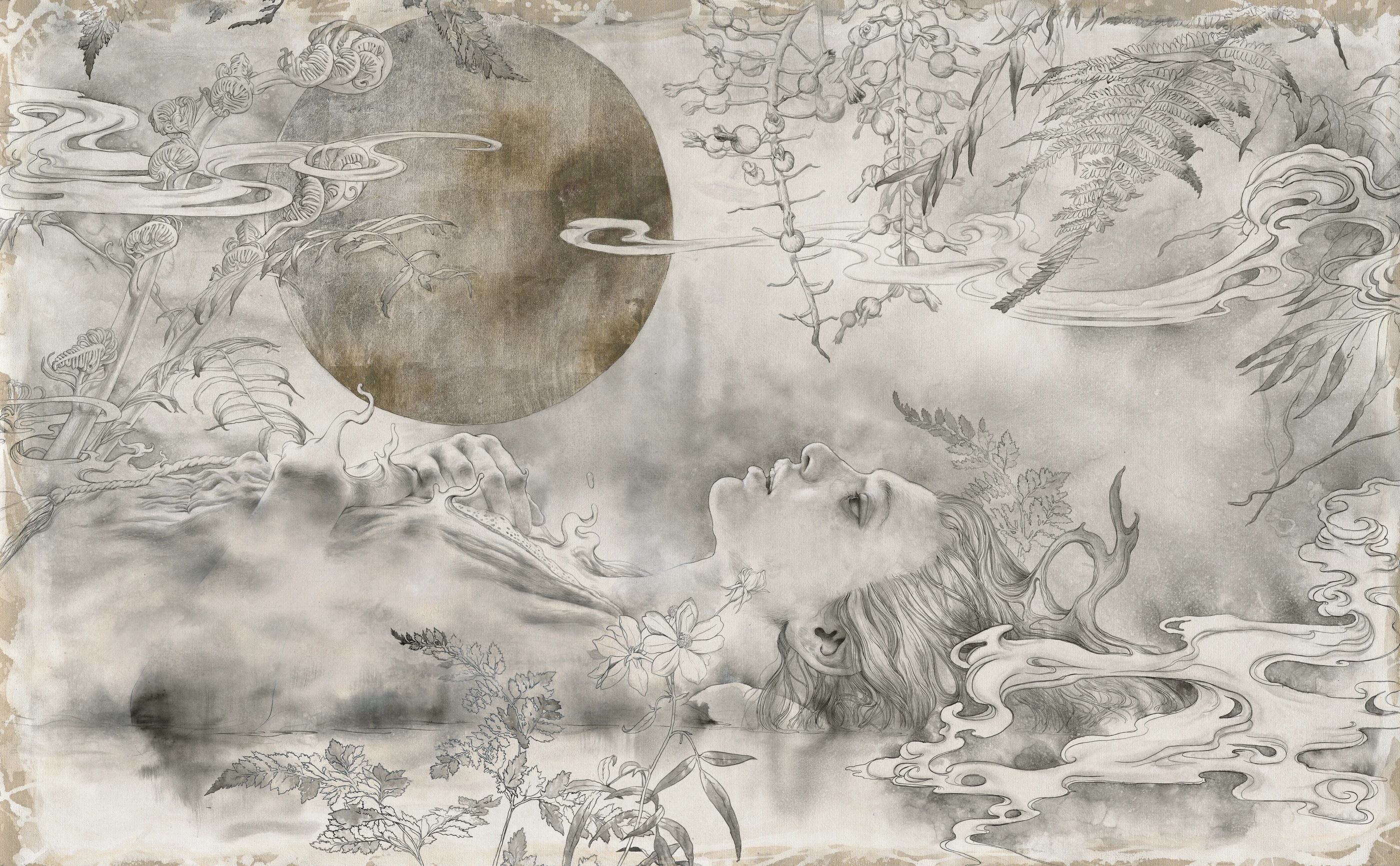
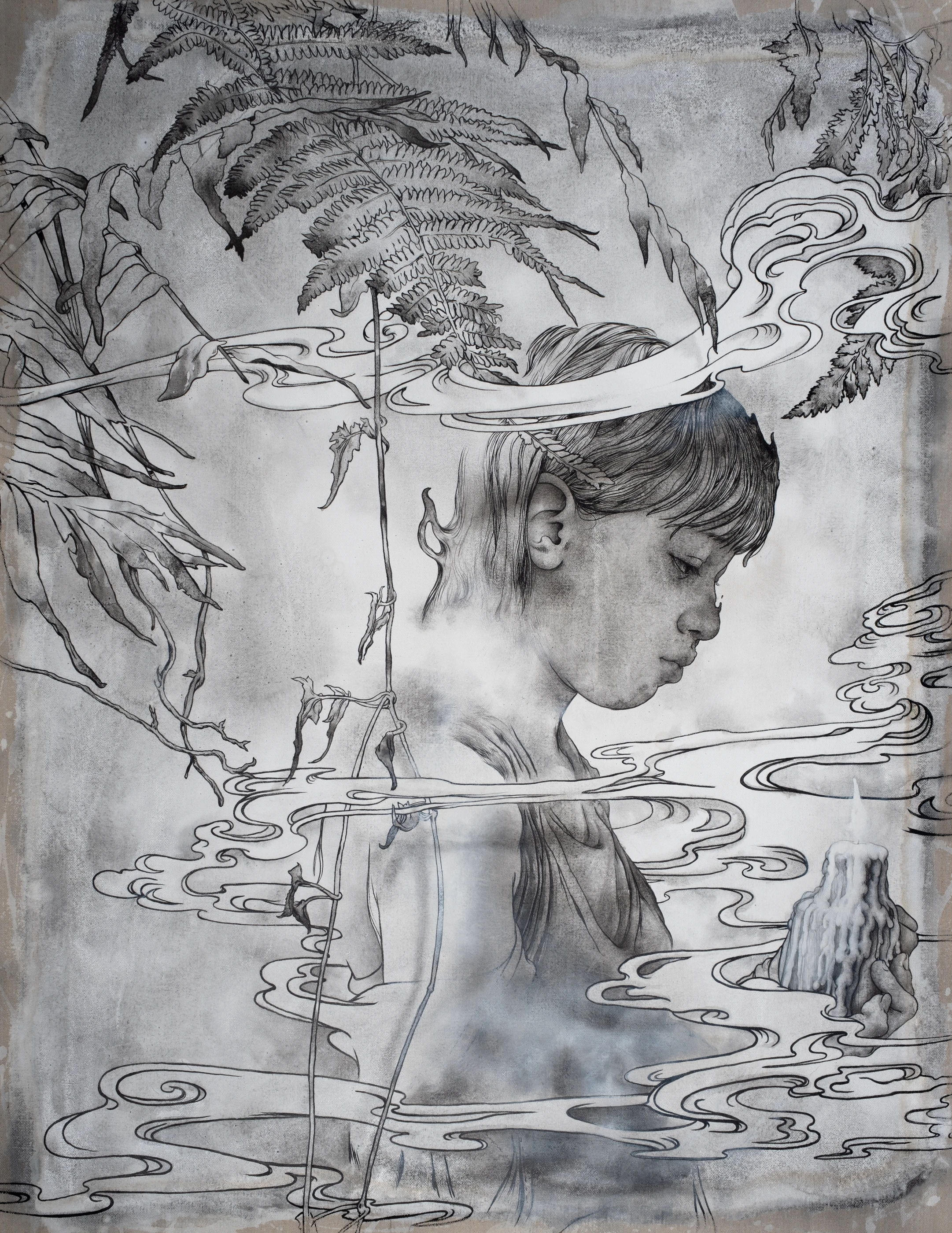
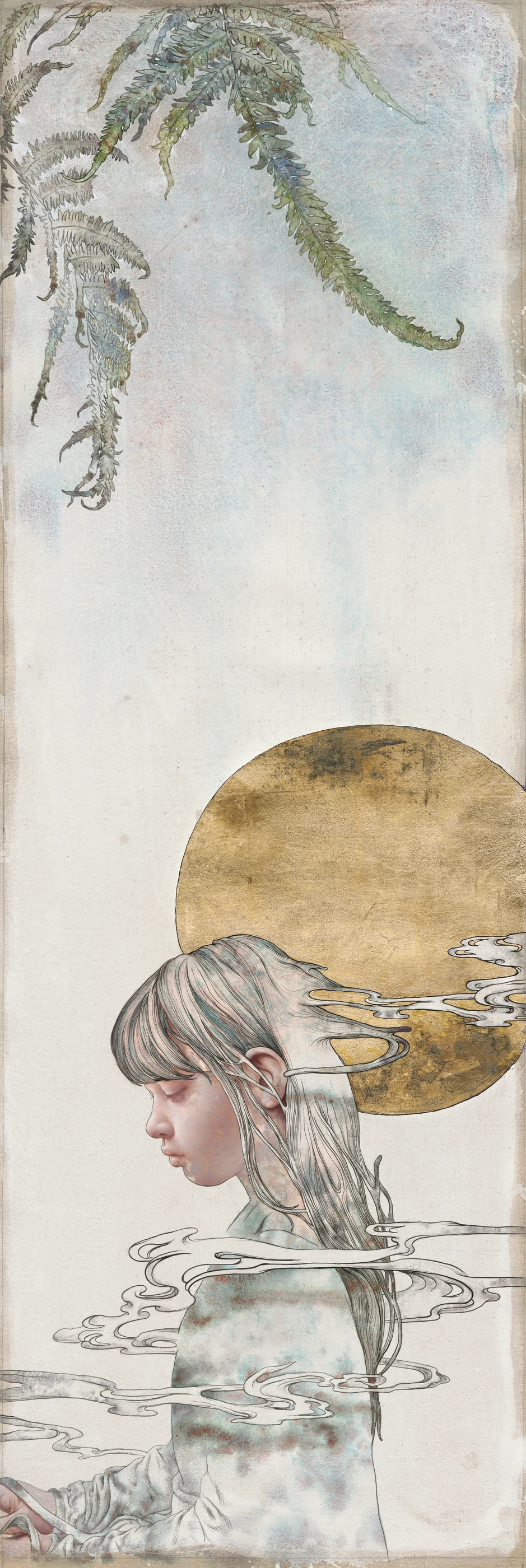
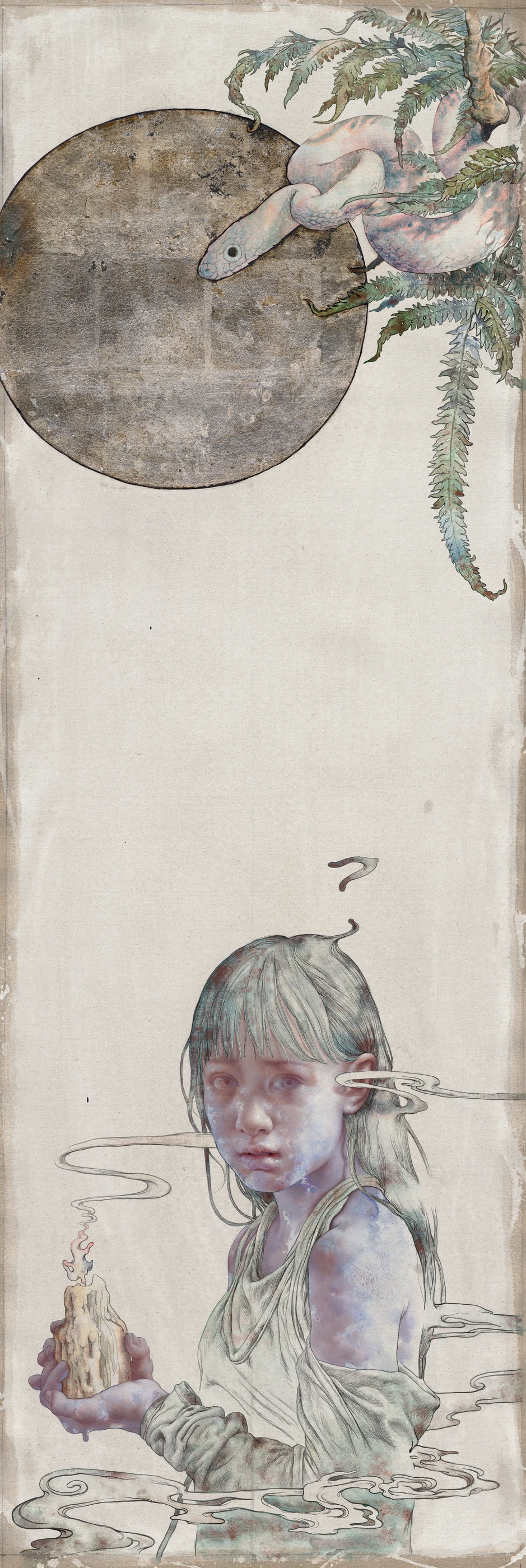
"Homesickness" begins with the observation of a migrant, not with nostalgia. After obtaining an EB1A green card and settling in Los Angeles, Lo Chan Peng was met by the "vastness" of Southern California: in a city measured to the scale of the automobile, people withdraw from one another's field of vision. The series takes this as its threshold, but swiftly turns the question from "what do I miss" into: how is a body from Taiwan, making work in the West, looked at — and the story called "Asia," by whom is it to be told?
For "Asia," too, is a wrapping. For too long it has been narrated by the Western gaze, simplified into an exoticism that is legible, consumable, collectable. Lo refuses to keep writing that version — he neither offers a pure "East" for the gaze nor retreats into some native, self-proclaimed "authentic" Asia; what he sets forth is an Asia that is hybrid, fluid, resistant to any single narration. And its engine is precisely Taiwan's history of successive colonisations: the contour of ukiyo-e, the reserved blankness of ink, the mineral grain of iwa-enogu, the burnt foil inherited from Japan — all long written, layer by colonising layer, into the island's cultural genome. Hybridity is not a collage assembled after the fact, but an inborn condition — and the position from which he peels at the wrapping of "who defined Asia."
Material thus becomes the site. Oil painting and realism are themselves a visual regime delivered by Western colonial modernity; he wields it with fluency, yet will not let it assimilate the Eastern media within the picture. When the Eastern medium refuses to be subsumed into the Western frame, the image halts in an unresolved tension — and this is the diasporic truth: a root system forking, lengthening, suspended in a transition not yet named. With the tools of the colonial master, he turns and loosens the master's gaze.
And the last wrapping belongs to this age. At a moment when algorithms generate images in milliseconds and cultural signs are endlessly reproduced and appropriated, Lo takes the days-long, many-layered work of the hand as a position — letting time, sedimentation and the irreproducible trace of the hand become the very content of the work. And so the final question of "Homesickness" is no longer private: when both identity and image can be endlessly wrapped and reproduced, what can still fix the place of a subject — and the story called "Asia," in the end, by whom, and through whose eyes, is it to be told?