

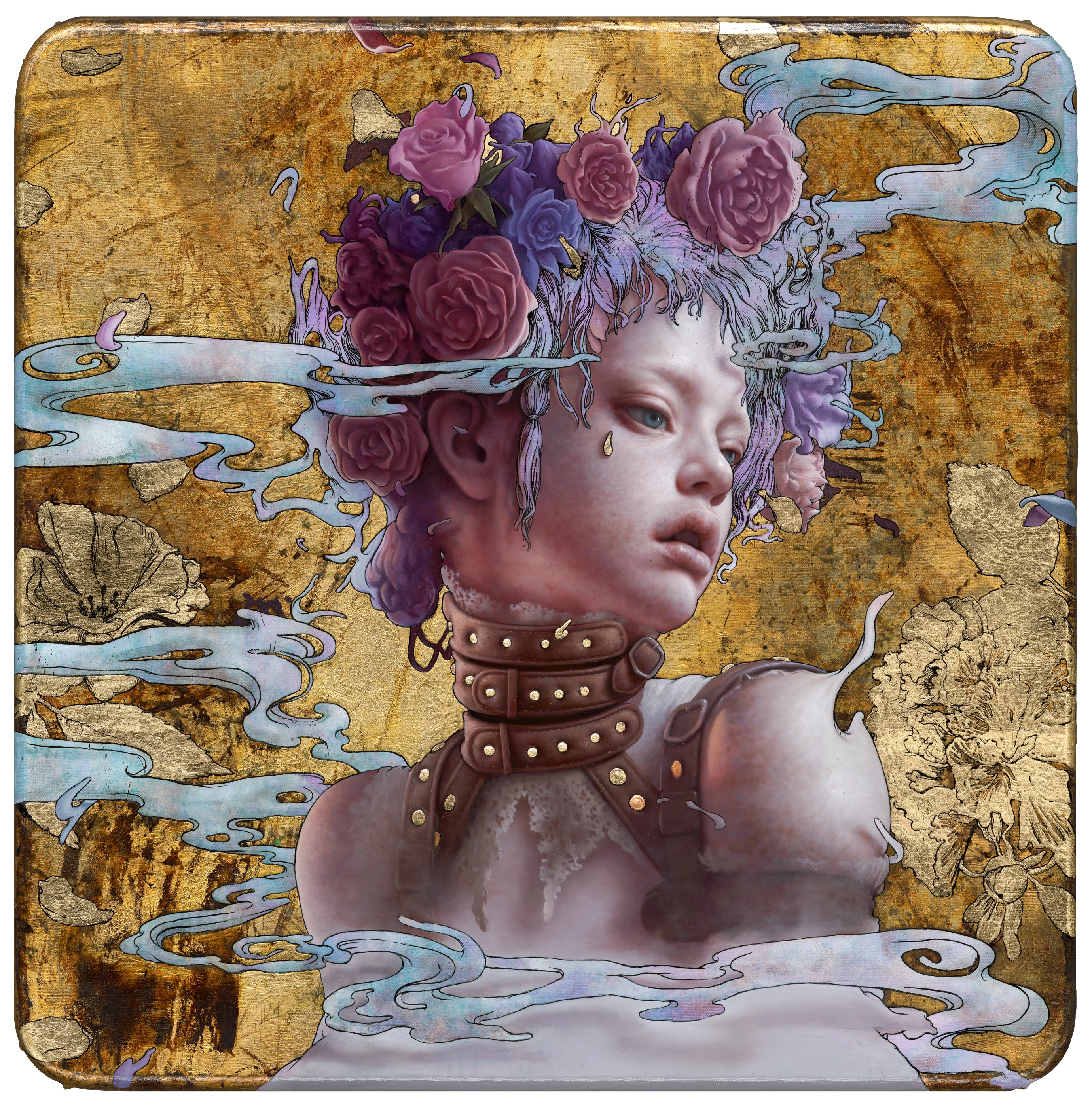
Before Arrival — The Twenty Years of Lo Chan Peng
What first holds you before a painting by Lo Chan Peng is a stillness difficult to name. His figures are quiet, restrained, as if time had come to rest in them, halted midway through some change — already departed from who they were, not yet arrived at who they are becoming. But to take this suspension for his subject is to miss what drives it. Beneath the stillness, the question that has driven him for twenty years is a sharper one: what, in fact, is real?
For in his view, what we call "reality" each day is not the same as truth. Reality is more like a fiction wrapped in layer upon layer: nation, religion, social systems, consumption and the media bind us into orders that appear self-evident yet are man-made. We are born inside these wrappings, believe within them, live within them, and rarely stop to ask what remains beneath. Almost all of Lo Chan Peng's work does one and the same thing — it peels these wrappings away, layer by layer, or sees through them.
This is no imposed reading; it is what he has said again and again. In his ink period he called colour "the false garment of decorum," beneath which the most primal self is at last laid bare. In "Ink Storm" he inverts the real and the illusory, declaring the objective object a delusive appearance and subjective consciousness the only reality. Facing a virtual idol, he invokes the "imagined community," reminding us that nation, religion and money are themselves fictions held in common belief. And his plainest account of his own work is this: to leave, little by little, the thin surface of things, and seek the truth that strikes the heart.
Realism is the blade he peels with. A paradox lives here: he uses the most lifelike of techniques not to praise reality but to expose it — rendering that "reality" flawless so that you first believe it utterly, then, all at once, see through it as one more exquisite wrapping. Plato held that realism was merely the manufacture of illusion; Lo turns this around, using the craft most able to manufacture illusion to unmask illusion itself.
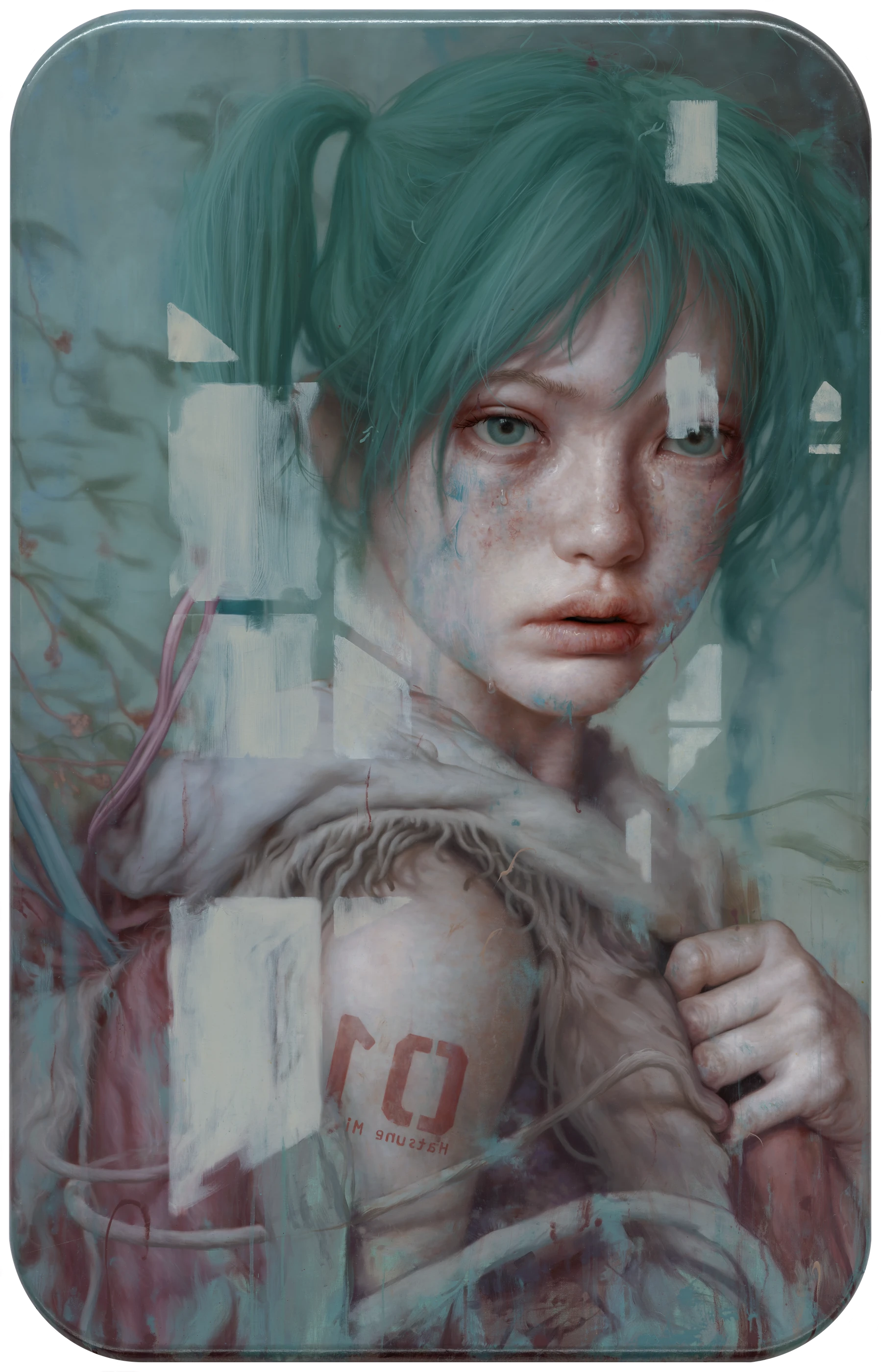
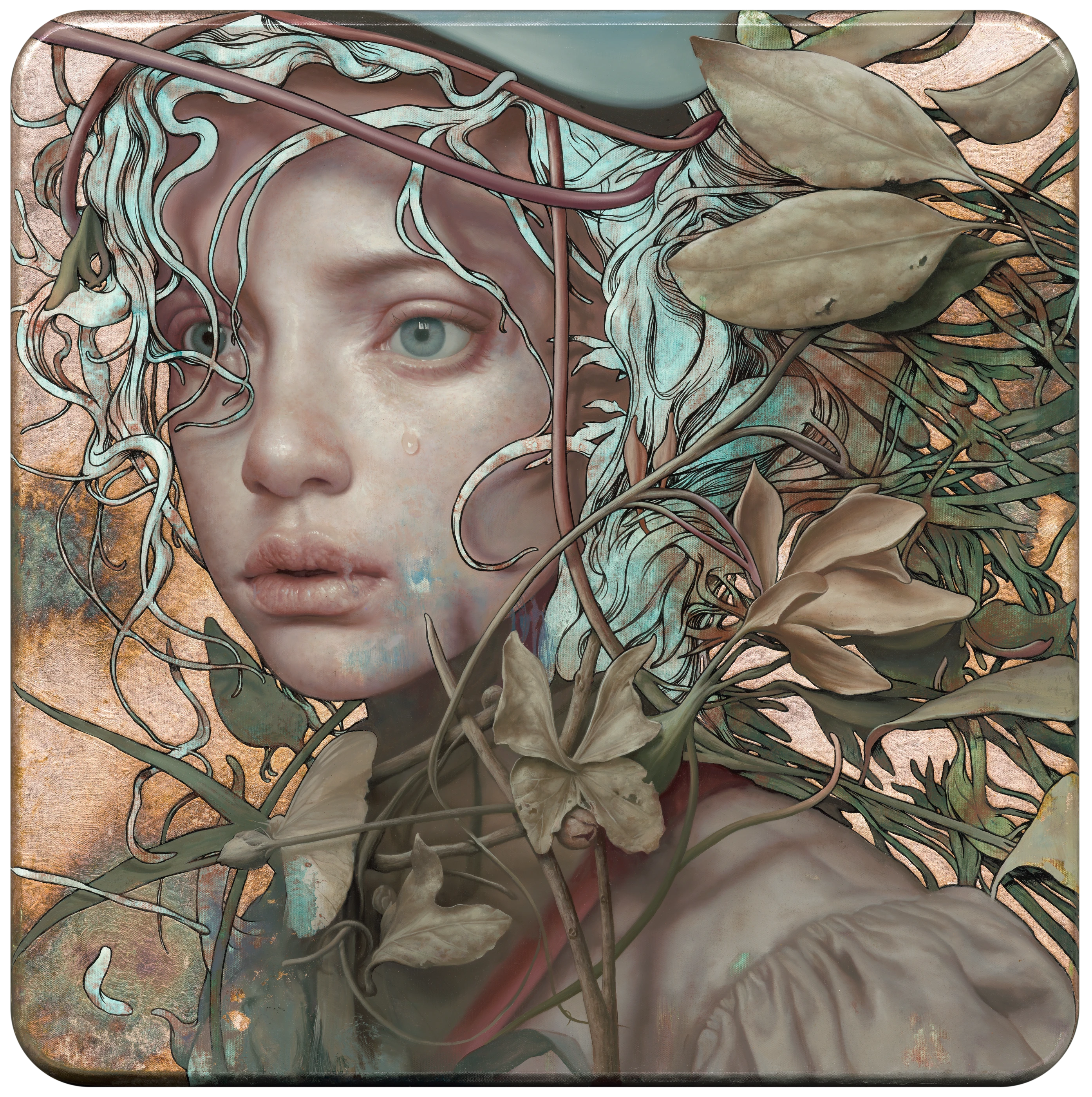
His way of painting is therefore an extension of the same proposition. The glazing of the Renaissance was born of an age that trusted the naked eye, an age that believed light fell honestly upon things. But we no longer meet the world chiefly through the naked eye — the screen has replaced the window, and the pixel, that self-emitting, quantified point of colour, has become the basic grammar of contemporary vision; seeing itself, in other words, is now wrapped in something new. Lo took the layered translucency of classical glazing and turned it to answer this shift, calling it "pixel glazing": building a picture not from reflected light, but from the logic of emitted light. One translucent layer pressed over another — he uses a layered technique to paint a world wrapped in layers; and that light, at once classical and digital, at once real and as if seen through a screen, is the very wrapping contemporary humanity now inhabits.
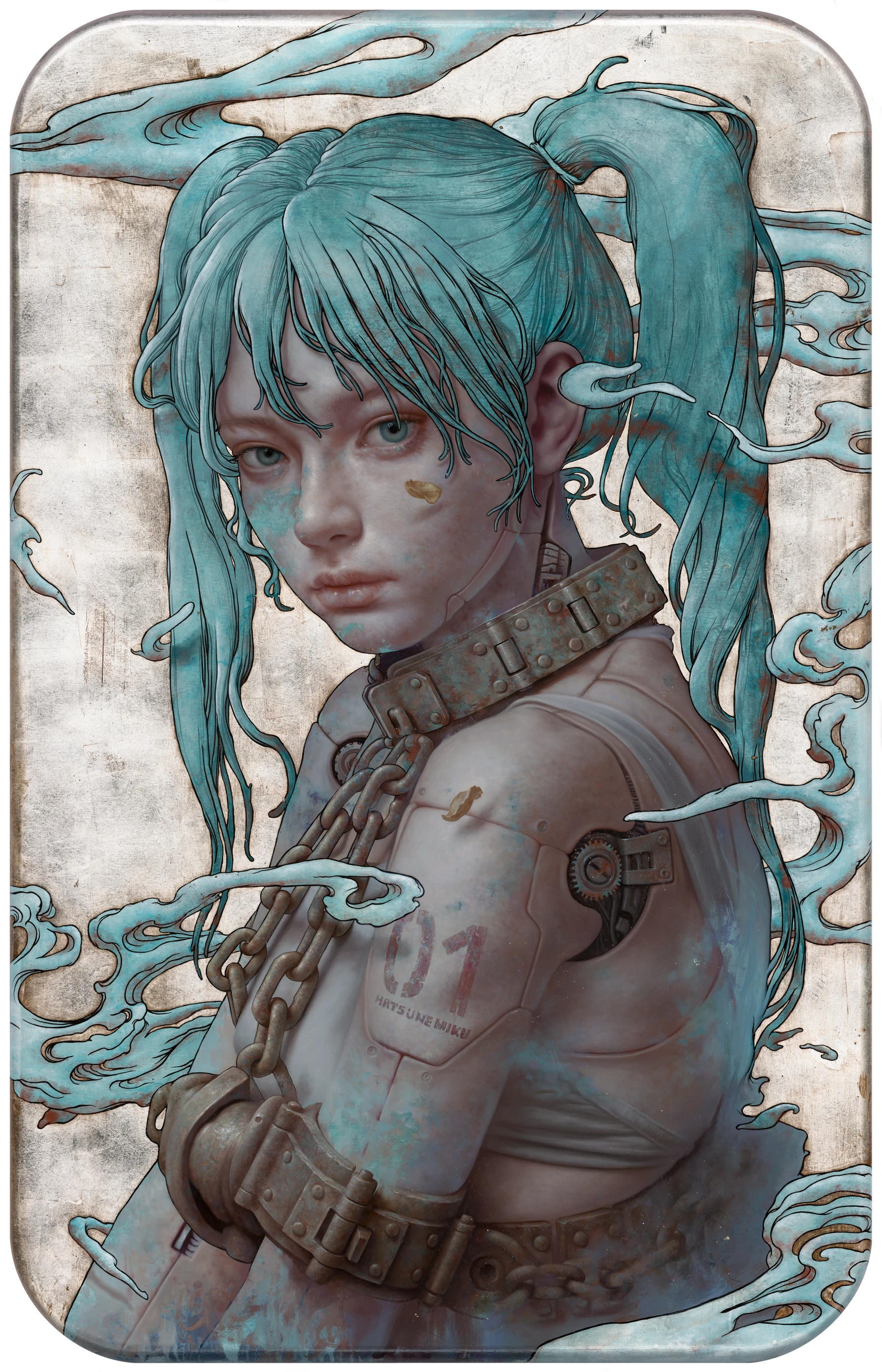
The wrappings he peels keep widening in scope. Early on he looked outward at his own generation: the "Strawberry Generation" series strips away the label that consumer society and the media had fastened onto the young, letting the generation beneath show through — one that could not yet define itself, already quietly bound by politics and nation. Around 2016, a private loss — together with the passing of years and a long preoccupation with religion — drew his gaze inward, and "Ink Storm," "Historic Movers & the Doomed," "Lumière" and "Post-Saints" turned to peel away the far larger wrappings of history, faith and death: history ceases to be the textbook's narrative and becomes an invisible web that shapes us unseen; faith turns from a ready answer back into a question. After his move to the United States, "Homesickness" peels at nation and culture — asking who wrapped up this identity called "Asia," and who has the right to narrate it; while "Hatsune Miku" presses the question to its limit: when a being conceived by collective imagination, purely fictional, begins to possess image and memory, does the line between fiction and truth still hold? From the generation of a single island to humanity's very definition of the real, his inquiry widens like a circle drawn ever larger; its centre never moves — always the same question: beneath the wrappings, what is real?
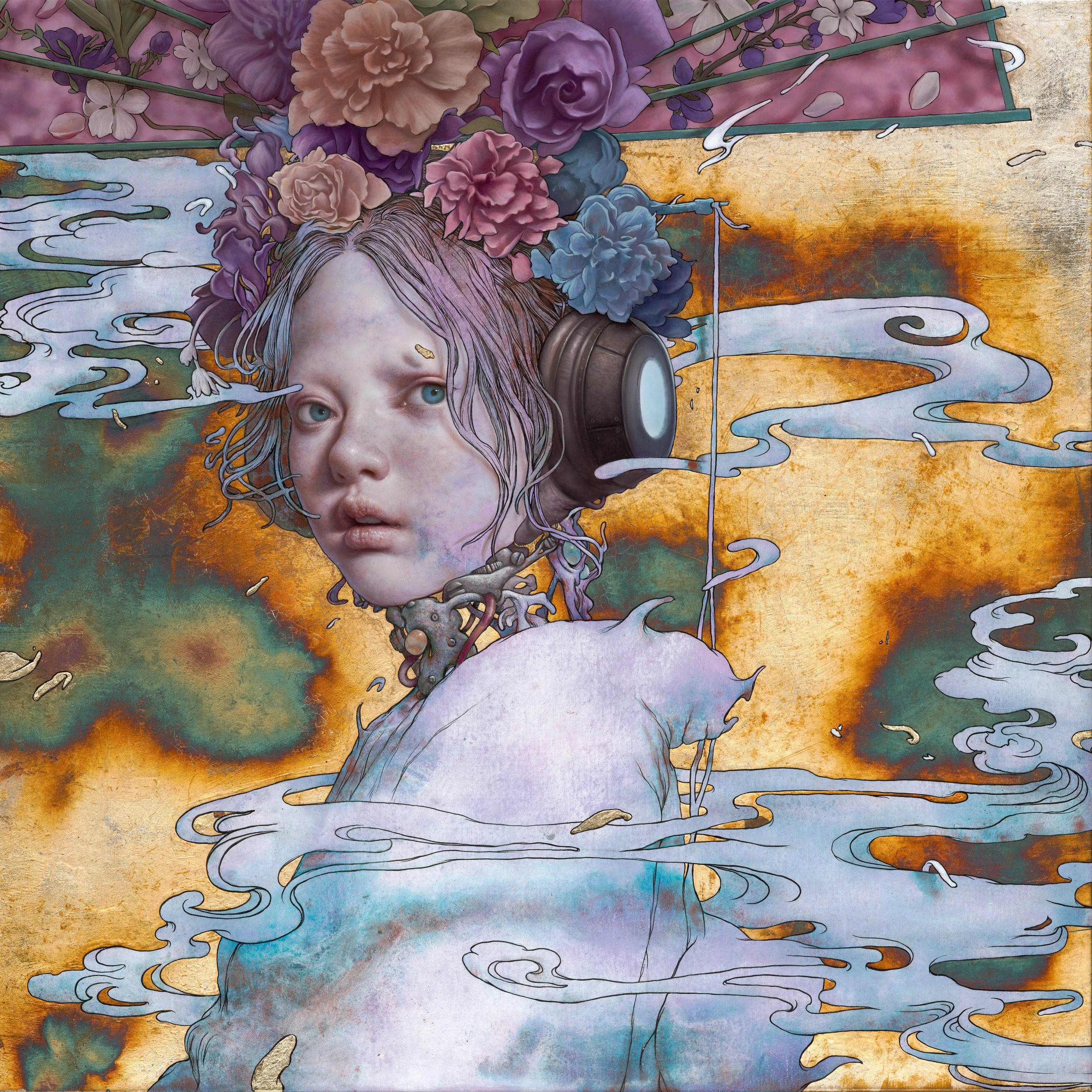
And the reason he paints his figures forever "in between" is that this is the moment of peeling — the lie already stripped away, the truth not yet reached. Contemporary art and anthropology give this position a name: liminality, from the Latin *limen*, threshold. His figures stand on that threshold, no longer belonging to the reality just peeled off, not yet across into the truth beyond; "before arrival" means before arrival at the real. And when every wrapping is gone, what does he believe truly remains beneath? Time. The wear, the burning, the erosion and the stains that recur on his surfaces are not decoration but the sediment time leaves after passing through a body — whether the body of a person or the body of the painting. The philosopher Bergson called this kind of time, uncuttable and to be lived rather than divided, duration; his figures are still not because they are frozen, but because they carry too much compressed time. Of all the wrappings that can be faked, duration alone cannot — it is what he reaches, peeling to the very bottom, and calls real.
In recent years he has let this hidden line show its barest face. In a digital practice called "Ghost," he has all but set down the brush, producing instead a kind of interface debris: images that look leaked from deep within some platform, screen-captured and forwarded, paired with a line of cold system language — a failed payment, an expired notice. There is nothing supernatural here, only a very fine wrongness in the everyday: a system still running normally that, for the first time, lets you sense it is not airtight. When the peeling gaze turns away from the human and toward the social systems we inhabit, the largest wrapping of all — the very fact that "reality runs as usual" — shows its crack. Ghost is the high-risk wing he deliberately keeps, a counterpoint to his slow painting; but the question it asks is the same.
That question grows newly urgent in the age of artificial intelligence. When images generate in an instant, styles can be learned, and taste can be turned into data, humankind has produced a wrapping unlike any before: an image with no body, no accumulation, no duration, yet able to imitate the world's appearance perfectly — a surface with nothing beneath. Lo is not anxious; he studies it, lives alongside it. But he chooses to keep painting, by hand, slowly. The weight of this insistence lies not in what machines cannot do — such claims will, sooner or later, be overtaken — but in its keeping of something that cannot be faked: the span of time in which a person becomes themselves, the failures, the hesitations, the long uncertainty. Humanity and craft, then, are no longer mere technique, but, in an age where even the real can be synthesised, the last token by which we recognise the real.
Across twenty years, Lo Chan Peng has painted from the young men and women of Taiwan to the leaders of history, to light after loss, to a virtual idol; the wrappings change, one for another, but the peeling hand never stops. Perhaps this is the posture he leaves to his age: at the moment when everyone has grown content with the wrapping, and has even begun to mass-produce it, one person still reaches out, stubbornly, to touch the thing beneath the layers — not yet arrived at, yet perhaps real. Before arrival.
